Secure electronic signatures
Easily sign documents online via SignSecure, ensuring your e-signatures are legally binding.



If you're already a commissioned notary public, you will be eligible to register as an Electronic Notary Public.
Register now to receive exclusive invitations to specialized seminars on future-proofing your notary practice.
Secure, verified, and Supreme Court–compliant—NotarizeIT sets the standard for e-notarization.
Discover how NotarizeIT is changing notarization and what it means for your business.
Easily sign documents online via SignSecure, ensuring your e-signatures are legally binding.
Authenticate through secure video conferencing, powered by UNAWA's in-house facial recognition technology.

Experience world-class encryption, fully compliant with the Supreme Court's Rules, the Data Privacy Act, and the Electronic Commerce Act.

Yes. The Supreme Court has officially approved the Rules on Electronic Notarization under No. 24-10-14-SC. This landmark ruling authorizes Philippine notaries to perform notarizations digitally using secure platforms like NotarizeIT. The rules modernize the process while ensuring full legal validity and protection of notarized documents.
NotarizeIT is UNAWA’s electronic notarization platform built to help notaries and
clients complete notarizations securely online. The process is simple and fully
compliant:
Upload your document onto the platform.
Verify your identity through secure online checks.
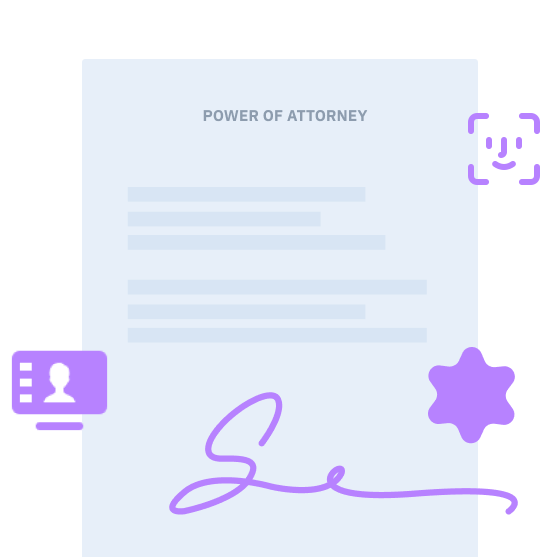
Meet the notary via live video conference for confirmation and signing.
The notary applies their digital seal and signature, locking the document.
A secure audit trail is created and stored for future verification.
This makes notarization more convenient, transparent, and secure compared to
traditional face-to-face processes.
Accredited notaries public can use NotarizeIT to offer online notarization
services under the new rules.
Businesses, law firms, and professionals can use NotarizeIT to notarize
contracts, affidavits, powers of attorney, and other legal documents.
Individuals who need personal documents notarized (such as affidavits or
authorizations) can also access the service through participating notaries.
Currently, NotarizeIT is in early access with a phased rollout to ensure
notaries and clients receive the proper training and support.
Almost all documents that traditionally require notarization in person can now be
done online, including:
Affidavits and sworn statements
Powers of attorney
Contracts and agreements
Business and corporate documents
Personal declarations and authorizations
Exceptions may apply to transactions requiring registry or specific
government protocols (e.g., real estate conveyances), but for most personal and
business documents, online notarization is now fully recognized.
Yes. NotarizeIT strictly follows the Supreme Court’s Rules on Electronic
Notarization. Every session is:
Encrypted to protect sensitive data.
Backed by real-time video conferencing to confirm the identity and intent of
signers.
Supported with identity verification tools to prevent fraud.
Completed with a digital notarial seal and certificate for authenticity.
Preserved with a tamper-proof audit trail that records every step.
These safeguards ensure that documents notarized through NotarizeIT are legally
valid, enforceable, and secure.
NotarizeIT is fully compliant with the Philippine Data Privacy Act of 2012. All
uploaded documents, personal information, and video recordings are:
Stored securely on access-controlled servers.
Accessible only to the notary and authorized parties.
Protected against unauthorized use or disclosure.
Clients can trust that their data is handled with the highest confidentiality
and security standards.
Convenience – No need to travel or line up at a notary’s office.
Faster turnaround – Complete notarization within minutes online.
Audit-ready records – Every notarization includes an audit trail and QR code
verification.
Secure and fraud-resistant – With encryption, ID verification, and live video,
the process is safer than physical notarization.
Legally valid – Fully compliant with Supreme Court rules, ensuring
enforceability in legal and commercial settings.

"E-notarization is not just a shift in format, it's a shift in mindset. We're being asked to rethink what it means to witness, verify, and attest in a digital space."

"Blockchain can be useful, but only if it solves a real problem. Adding complexity for its own sake doesn't strengthen the system."

"Lawyers need to stop asking whether tech is replacing us—it's not. We should be asking how it can make us better at what we do."

"We're not just talking about notarization. We're talking about how people experience the legal system—and if they trust it enough to engage with it digitally."

"What excites me is that this opens the doors for a more accessible justice system. Geography no longer limits access to legal services."

"The Philippines can actually be a leader in this space [e-notarization] if we focus on interoperable legal technologies—not just compliance for its own sake."

NotarizeIT is gearing up for full roll-out under the Supreme Court's new rules. We'll be ready to apply the moment accreditation opens. Join our info sessions now to prepare your practice for e-notarization.